
Furnace Maintenance Checklist to Keep Your Heating System Reliable
Recent Posts
Signs of Poor Indoor Air Quality in Houses and Apartments
Signs of poor indoor air quality include headaches, fatigue, allergies, and nausea. See common symptoms, home warning signs, & when to test air quality.
What Is Geothermal Heating and Cooling, and How Home Systems Work
Geothermal heating and cooling uses stable ground temperatures to heat and cool homes efficiently. See how systems work, costs, savings, and climate fit.
How to Use a Dehumidifier Without Over-Drying or Wasting Energy
How to use a dehumidifier safely, including correct humidity settings, continuous use guidelines, and tips to prevent dry air and excess energy use.
What Is HVAC? A Beginner-Friendly Breakdown of HVAC Systems
Recent Posts Schedule Your HVAC Repair Today Comfort is Just a Click Away! Contact Us need any help ? Call Us +1 (855) 937-2821 Email
When the first frost of autumn hits, heating systems are among the first things that catch our attention for managing the temperature inside. A silent furnace in the middle of a cold snap is more than just an inconvenience. Essentially, it can lead to frozen pipes, expensive emergency repair bills, and a very unpleasant household experience. Therefore, it is important to manage your furnace maintenance checklist on time.
Whether you have a gas-fed workhorse, an oil-burning classic, or a modern electric unit, regular maintenance is necessary. As the season starts, inspecting a furnace can prove beneficial in various ways.
This furnace maintenance checklist will help you know exactly what you need to do to keep your furnace system working.
1. Universal Maintenance: Tasks for Every Furnace
Regardless of what powers your heater, these three tasks are non-negotiable in your furnace maintenance checklist.
Change the Air Filter
This is the single most important task a homeowner can do for the maintenance for furnace. Notably, a clogged filter forces your blower motor to work harder, increasing your energy bills and shortening the lifespan of the motor.
- Fiberglass filters: Change every 30 days.
- Pleated filters: Change every 90 days.
- High-efficiency (HEPA) filters: Can last 6–12 months, but check them monthly.
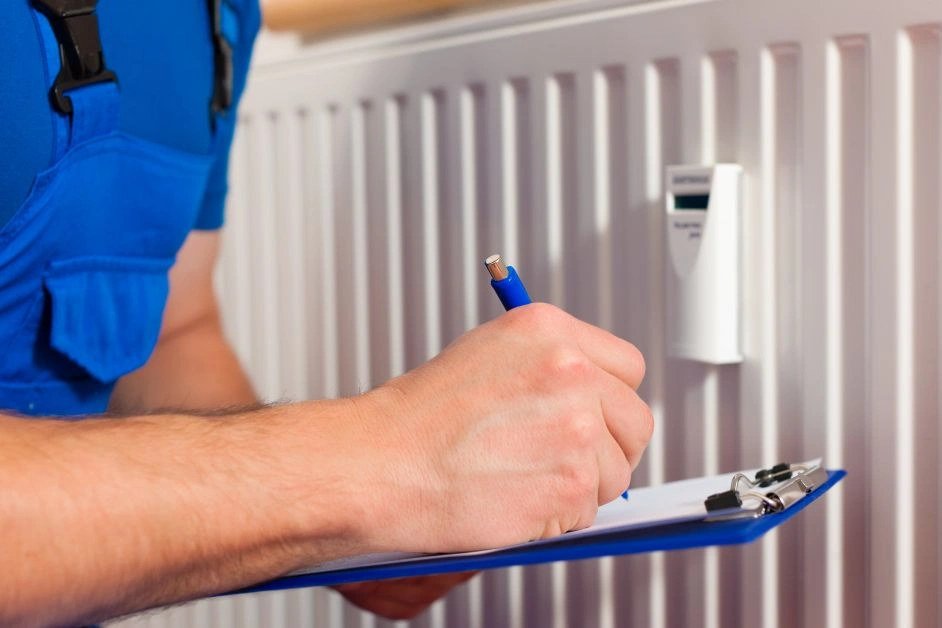
Clear the Area
For commercial or home furnace maintenance, ensure there is at least a 3-foot clearance around the unit. Never store flammable materials like paint thinners, gasoline, or even stacks of old newspapers near the furnace.
Inspect the Thermostat
In terms of home furnace inspection, know that if your furnace isn’t kicking on, it might not be the furnace at all. Therefore, it is recommended that you look for the following:
- Battery Check: Replace batteries annually.
- Leveling: For older mechanical thermostats, ensure they are level; if they tilt, the mercury switch won’t work correctly.
- Upgrade: Consider a smart thermostat to reduce wear and tear by optimizing run times.
2. Gas Furnace Checklist
Gas furnaces are the most common heating systems. Significantly, they involve combustion and flammable fuel so safety is the priority here.
Inspect the Burner Flame
For gas furnace maintenance, peek through the observation window. The flame should be a steady, crisp blue.
The Danger Sign
A yellow or flickering orange flame indicates incomplete combustion, which can produce Carbon Monoxide (CO). If you see this, call a furnace repair company immediately.
Clean the Flame Sensor
You must add to your furnace maintenance checklist about cleaning the flame sensor of gas furnaces. Over time, a thin layer of oxidation builds up on the flame sensor. Flame must keep showing up. However, if it does not, gently rubbing it with a bit of fine emery cloth can fix the issue.
Check the Flue Pipe
The last of the gas furnace maintenance checklist involves inspecting the vent pipe (exhaust) for gaps, rust, or soot. Ensure birds haven’t built nests in the exterior vent. Significantly, a blocked flue can backdraft Carbon Monoxide into your living space.
3. Oil Furnace Maintenance Checklist
Next on the furnace maintenance checklist are the oil furnaces. Oil units are robust but dirtier than gas or electric. They require a bit more attention to maintain.
Replace the Oil Filter and Nozzle
Oil contains impurities that can clog the small nozzle that sprays fuel into the burner. In terms of oil furnace maintenance, replacing the filter and the nozzle annually prevents puff-backs (sooty explosions caused by delayed ignition).
Clean the Heat Exchanger
Oil creates soot, and even a 1/16th-inch layer of soot on the heat exchanger can reduce efficiency by 10%. Therefore, add to your furnace maintenance checklist about using a wire brush to clear out carbon deposits. Significantly, it also helps ensure maximum heat transfer.
Check the Cad Cell
The cad cell is a light-sensitive eye that shuts the motor off if it doesn’t detect a flame. Wipe the face of the cell with a soft cloth to ensure it has a clear view of the fire.
Electric Furnace Maintenance Checklist
Electric furnaces are simpler because they don’t involve fire, but they draw massive amounts of current, making electrical integrity the focus.
Inspect Heating Elements
Annual furnace maintenance of electric furnaces uses coils that heat up like a giant toaster. If one coil burns out, the furnace will still run, but it won’t get the house up to temperature. However, a trained technician can use a multimeter to check the Amperage of each element.
Tighten Electrical Connections
Electric furnace maintenance requires tightening the loose wires. Notably, the loose wires of electrical furnaces can melt wire insulation or start a fire. Therefore, it is recommended that you always turn off the breaker before touching any wiring.
Lubricate the Blower Motor
While many modern motors are permanently sealed, older electric furnaces often have oil ports. Therefore, in your yearly furnace maintenance, add two drops of 30-weight non-detergent oil to prevent the bearings from seizing.
Update Your Annual Checklist and Manage Furnace Efficiency Today
The Big Three Safety Checks of Your Furnace Maintenance Checklist
Safety Item | What to Look For |
| Carbon Monoxide Detector | It must be a part of your furnace maintenance checklist to test monthly for carbon monoxide. Ensure one is located on every floor of the home. |
| Heat Exchanger Cracks | Another of the furnace maintenance tips Is to look for excessive rust or visible cracks. A cracked exchanger is a terminal illness for a furnace. |
| Odd Noises | Squealing (belt issue), banging (delayed ignition), or rattling (loose panels) must also be checked. |
When to Call a Professional Furnace Maintenance Technician
Even if you can handle filters and cleaning, some tasks require specialized tools like combustion analyzers or manometers. Therefore, professional technicians must also be part of your furnace maintenance checklist. An annual check by a maintenance technician for the following must be done:
- Check for gas leaks.
- Verify the integrity of the heat exchanger.
- Adjust the fuel-to-air ratio for peak efficiency.
In The End
Maintaining your furnace isn’t just about avoiding a cold night. However, it is about protecting your home’s most expensive mechanical investment and ensuring the safety of everyone inside. Therefore, by staying proactive with furnace maintenance checklists, you enhance your predictive care. Moreover, it also guarantees you peace of mind when temperatures drop.
Why Choose Airflow Fixer?
At Airflow Fixer, our certified technicians provide dependable HVAC services with exceptional skill, experience, and reliable support. Our smart systems and services optimize performance, lower utility costs, and ensure consistent, year-round comfort.
FAQ's
How long does a typical furnace last?
On average, a well-maintained gas furnace lasts 15 to 20 years, while an oil furnace can last 20 to 25 years. Electric units typically fall in the 15 to 20-year range. If your unit is over 15 years old and requiring frequent repairs, it may be more cost-effective to upgrade to a high-efficiency model.
Can I skip professional maintenance if I change my own filters?
Self-maintenance is great. However, it is one of the benefits of furnace maintenance that a professional technician’s check can guarantee you added peace of mind. These trained professionals have tools like a combustion analyzer to detect invisible Carbon Monoxide leaks and a manometer to check gas pressure.
Is it normal to smell gas when the furnace turns on?
It is normal to smell a very faint scent of gas for a few seconds when the furnace first kicks on for the cycle. However, if you smell a strong odor of rotten eggs or if the smell lingers, leave the house immediately, leave the door open, and call your gas company from a safe distance. Do not flip any light switches or use your phone inside the house.
Why is my furnace blowing cold air?
The most common culprit is a dirty air filter (limiting airflow) or a tripped limit switch. For gas units, it could be a failed thermocouple or igniter.
Is carbon monoxide a risk with electric furnaces?
No, carbon monoxide is a byproduct of combustion (burning fuel). Since electric units don’t burn fuel, they don’t produce CO. However, they still carry risks like electrical fires if not maintained.