
How Do You Test the Air Quality in Your Home and What It Reveals
Recent Posts

How Does a Diffuser Work and Why Home Owners Use Air Diffusers
How does a diffuser work inside a home air system? The diffuser controls airflow direction so the air spreads evenly instead of blowing in one spot.

How to Make A Basement Warmer With Heating, Vent Placement, and Insulation
How to make a basement warmer by sealing drafts, improving airflow, and adding heating. Keep winter temperatures comfortable and reduce chilly floors.

Air Filter for Allergens That Helps Reduce Dust and Pollen
Choosing the right air filter for allergens helps allergy sufferers reduce sneezing, congestion, and asthma symptoms caused by indoor air pollutants.
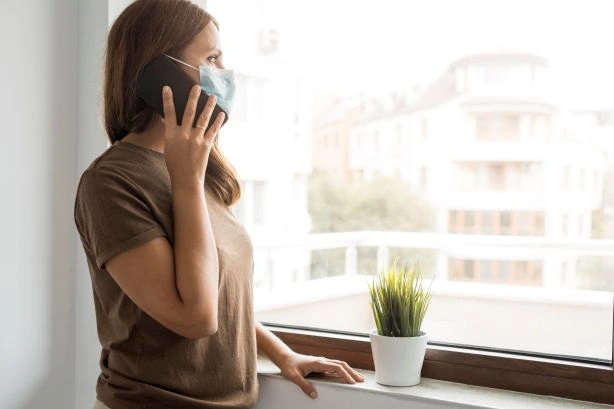
Signs of Poor Indoor Air Quality in Houses and Apartments
Signs of poor indoor air quality include headaches, fatigue, allergies, and nausea. See common symptoms, home warning signs, & when to test air quality.
We spend most of the time of our lives indoors, yet the air inside our homes can be two to five times more polluted than the air outside. From invisible gases like radon to microscopic mold spores and everyday dust, all can lead silently to health issues. Therefore, people often question how do you test the air quality in your home.
It is important to know that there are several ways for testing air quality in your home. If you’ve been waking up with a scratchy throat or noticing a strange odor, it is time to get the test done.
Here is your comprehensive, step-by-step guide to assessing and improving your home’s air quality.
Phase 1: Air Quality Testing Through The Sensory Audit
On elaborating the query of how do you test the air quality in your home, know that before spending on high-tech sensors, use your natural senses. Essentially, your body is often the first device to detect an issue.
The Scent Check
For an air quality test in apartment, it is recommended that you leave your home for at least three hours. When you return, take a deep breath the moment you walk in. Note if you smell mustiness (mold), a sweet chemical scent (VOCs from new furniture), or a metallic tang.
Health Tracking
Keep a symptom diary for the air quality control test. Note whether your headaches, watery eyes, or sneezing fits vanish when you go to work or spend time outdoors. If your health improves the moment you leave the house, the building is likely the culprit.
Visual Inspection
Further on testing for indoor air quality, look for condensation on windows. In addition, look for soot marks near vents, or “ghosting” (dark streaks on walls caused by particulate matter).
Phase 2: Air Purity Test by Identifying the Big Four Pollutants
To get accurate results in terms of how do you test the air quality in your home, you need to target specific categories of pollutants.
Particulate Matter (PM2.5)
These are tiny particles (dust, smoke, pollen) that are small enough to enter your bloodstream through your lungs. For air quality testing and control, use a digital Laser Particle Counter and look for a PM2.5 reading below 10 µg/m³.
Volatile Organic Compounds (VOCs)
These are gases emitted from paints, cleaning supplies, new car smell, plastics, and even air fresheners. Therefore, multi-gas monitors or professionally lab-analyzed canisters can be used for air tests. The total VOC (TVOC) levels should ideally be below 0.5 mg/m³.
Radon Gas
Radon is a colorless, odorless radioactive gas that leaks from the soil into basements. It is the leading cause of lung cancer among non-smokers. To perform a home air quality test, place charcoal canisters for short-term (3–7 days) or long-term (3–12 months) use. Significantly, the EPA recommends mitigation if levels are at or above 4 pCi/L.
Carbon Monoxide (CO) and Carbon Dioxide (CO2)
CO is a deadly byproduct of incomplete combustion (furnaces, stoves), while CO2 is a proxy for how stale your air is. To perform indoor air pollution testing for homes, most smart air monitors now include CO2 sensors.
Phase 3: Step-by-Step Air Quality Inspection Process
Further elaboration on how do you test the air quality in your home, the following inspection process is followed
Step 1: Choose Your Tool
You have three main paths to perform home air quality tests, depending on your budget and concerns:
All-in-One Smart Monitors
These provide real-time data on PM2.5, VOCs, CO2, humidity, and temperature.
Mail-in Lab Kits
These indoor air quality testing kits are best for specific threats like mold or lead dust. You collect a sample and mail it to a certified lab.
Professional Assessment
Hiring an Industrial Hygienist can also help with testing for air quality. However, this is the most expensive option ($500–$1,500) but provides the most legal and scientific weight.
Step 2: Set the Baseline
Next in the process of how do you test the air quality in your home, it is recommended that you close all windows and doors for at least 12–24 hours before testing.
Step 3: Strategic Placement
For an air quality in home test, don’t just stick your monitor next to an open window or directly on the floor.
Height
Place the selected tool at breathing zone height (3 to 6 feet off the ground).
Location
Perform at home air quality test in the rooms where you spend the most time, specifically the master bedroom and the living room.
Avoid Kitchens
For an air quality control test, don’t place sensors directly above the stove. Significantly, cooking fumes will cause temporary spikes that don’t reflect the overall house health.
Step 4: Monitor Over Time
Air quality is fluid. A single snapshot for air quality sample testing doesn’t tell the whole story. Therefore, monitor keeping the following in mind:
The Toast Factor
Burning a piece of toast can send PM2.5 levels through the roof for an hour. This isn’t a chronic problem.
The Rain Factor
Humidity spikes during storms can trigger mold spores when checking home air quality.
The Duration
Run your air quality control test for at least 7 consecutive days to see how your home reacts to cooking, cleaning, sleeping, and weather changes.
Phase 4: Interpreting Your Results for Household Air Quality Testing
Once you have your data for how do you test air quality in your homes, compare it against these standard safety thresholds:
Pollutant | Ideal Range | Action Required |
| Radon | < 2 pCi/L | > 4 pCi/L |
| PM 2.5 | < 10 µg/m³ | > 35 µg/m³ |
| CO2 | 400 – 800 ppm | > 1,500 ppm |
| Humidity | 30% – 50% | > 60% (Mold Risk) |
| VOCs | < 250 ppb | > 500 ppb |
Phase 5: Professional Mold Testing
People also often ask, how to test indoor air quality for mold. Know that if you suspect mold (due to a musty smell or water damage), opt for the following:
Air Sampling
To test air quality of molds, use a physical piece of material to see if mold is actively growing.
Tape Lift/Bulk Sampling
To test air quality of molds, use a physical piece of material to see if mold is actively growing.
Moisture Mapping
For a clean air test, use infrared cameras to find leaks behind walls that are “feeding” the air quality issue.
Phase 6: Immediate Improvements: The After-Test Action Plan
In terms of how do you test the air quality in your home, know that if your levels are high, don’t panic. Most IAQ (Indoor Air Quality) issues have straightforward fixes:
For High VOCs
When dealing with the query of how do you test air quality in a house, know that if your VOCs are high, increase ventilation. Open windows (if outdoor air is clean) and switch to Low-VOC or Zero-VOC paints and cleaners.
For High PM2.5
Along with having an air quality tester, also invest in a HEPA air purifier. Ensure the CADR (Clean Air Delivery Rate) matches your room size. Change your HVAC filters to a MERV 11 or 13 rating.
For High CO2
You need fresh air. Modern, airtight homes often require an ERV (Energy Recovery Ventilator) to swap stale indoor air for fresh outdoor air without losing heat.
For High Humidity
Run a dehumidifier to keep levels below 50%, effectively starving mold of the moisture it needs to thrive.
In The End
Understanding the query of how do you test the air in your home proves beneficial in various ways. Testing your air quality must be a regular habit. Essentially, when you bring new furniture into your home, change your heating system, or experience different seasons, your air changes too. By following these steps, you’re moving from an environment that might be taxing your immune system to a home that actually helps you recover.
Why Choose Airflow Fixer?
At Airflow Fixer, our certified HVAC technicians deliver reliable service backed by expertise, proven experience, and trusted support. Our advanced solutions improve system efficiency, reduce energy costs, and maintain comfort in every season.
FAQ's
What do air quality tests measure?
Air quality tests measure pollutants like dust and pollen. In addition, these tests also measure mold spores, volatile organic compounds (VOCs), carbon monoxide, and other gases to assess how clean and safe the air is to breathe.
What is air quality testing?
Air quality testing is the process of checking indoor or outdoor air for pollutants. Moreover, it also checks for contaminants to determine how clean, healthy, and safe the air is to breathe.
How to measure home air quality?
Home air quality can be measured by using indoor air quality monitors to track pollutants like dust, VOCs, humidity, and carbon dioxide. On the other hand, you can also measure it by hiring a professional service to test for mold, allergens, and harmful gases.
What does an air quality test detect?
An air quality test detects pollutants and contaminants such as dust, pollen, mold spores, bacteria, volatile organic compounds (VOCs), carbon monoxide, and other harmful gases in the air.
Why is my air quality worse in the winter?
In the winter, we seal our homes to save on heating costs. This prevents natural air exchange, causing indoor-generated pollutants (like cooking fumes, pet dander, and $CO_2$) to build up to much higher concentrations than they would in the summer when windows are frequently open.